Also today

xAI Releases Grok 4.5: Cursor-Trained Coding and Agentic Model at $2/M Input Tokens
SpaceX/xAI has released Grok 4.5, a model explicitly trained with Cursor for coding and agentic task performance, priced aggressively at $2 per million input tokens. The Cursor-training angle is notable — it suggests the model has been optimized for the edit-apply-test loop that characterizes real coding agent workflows rather than just code completion benchmarks. This positions Grok 4.5 as a direct competitor to Claude 3.5 Sonnet and GPT-4o for developer tooling and code agent use cases. The $2/M input price undercuts many comparable models, making it attractive for high-volume coding pipelines. Developers running code generation at scale or building IDE-integrated agents should benchmark this against their current model choice.
MarkTechPost
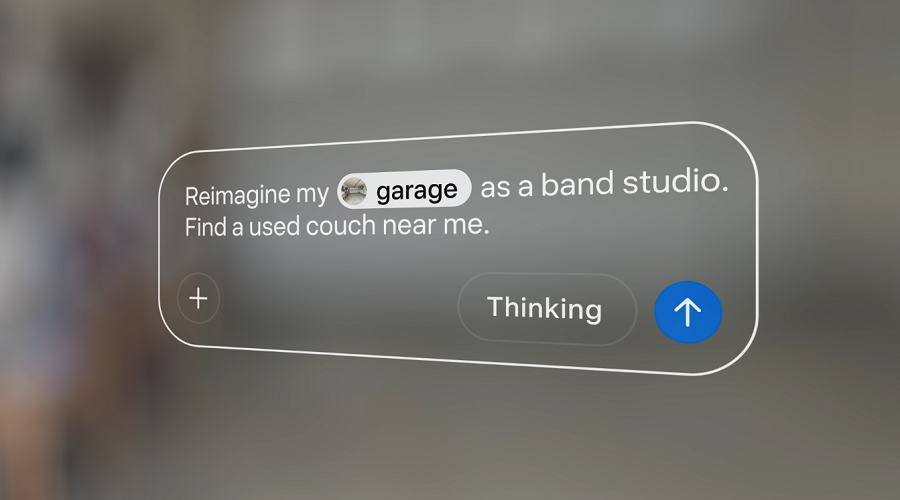
Meta Launches Multimodal Image Generation Model with Coding and Search Capabilities
Meta has released a new image generation model that integrates coding and search capabilities alongside visual generation, making it meaningfully more than a diffusion wrapper. This multimodal combination — generate, search, and write code in a unified model — signals Meta's push toward general-purpose multimodal agents rather than siloed image tools. For developers, this opens up workflows where image generation is part of a larger pipeline that also queries knowledge or outputs structured code. The model's positioning alongside coding capabilities suggests it may target developer productivity and AI-assisted design tooling. Availability details and API access should be checked against Meta AI's developer portal for integration planning.
Meta AI
NVIDIA Nemotron Achieves Benchmark-Leading Performance with LangChain Deep Agents Harness
NVIDIA's Nemotron model has demonstrated benchmark-leading results when paired with LangChain's deep agents evaluation harness, validating the open-stack approach to agent development. This is significant because the benchmark uses a real agentic harness — multi-step tool use, reasoning chains — rather than static Q&A, making the results more representative of production agent behavior. For developers building on LangChain, this provides evidence that Nemotron is worth evaluating as a backbone model for complex agent workflows. NVIDIA's push with open-stack integrations also means this isn't a closed ecosystem win — the components are composable. Engineers can pair this with the NVIDIA open data for agents release (also today) for a more complete agent training and evaluation pipeline.
NVIDIA

Hugging Face and NVIDIA Release Open Data for Agents
NVIDIA and Hugging Face have jointly published an open dataset specifically designed for training and evaluating AI agents, hosted on the Hugging Face hub. Agent-specific training data has been a significant bottleneck — most open datasets are instruction-following or QA-focused, not optimized for multi-step tool use, planning, and environment interaction. This release directly addresses that gap and should accelerate open-source agent development outside of closed lab environments. The dataset's availability on Hugging Face means it integrates cleanly into existing fine-tuning and evaluation pipelines. Developers building or fine-tuning agent models should incorporate this dataset into their training runs and evaluation benchmarks.
Hugging Face

Google AI Studio Adds 'Import from GitHub' to Build Mode for Repo-to-App Deployment
Google AI Studio's Build Mode now supports importing an existing GitHub repository and converting it into an editable, deployable application directly within the studio. This closes a significant friction gap — previously, developers had to manually port existing codebases to work with AI Studio's generation and deployment tools. The feature targets developers who want to augment or refactor existing projects with AI assistance rather than starting from scratch. Combined with Gemini's code understanding capabilities, this could meaningfully accelerate migration and modernization workflows. Developers with existing repos who want to leverage AI-assisted development should test the import flow to evaluate how well it handles their project structure and dependencies.
MarkTechPost
OpenAI Publishes Methodology for Separating Signal from Noise in Coding Evaluations
OpenAI has released a detailed post on their approach to coding evaluations, specifically addressing how to distinguish genuine capability signals from benchmark noise and contamination artifacts. This is a methodologically important contribution — coding benchmarks have been increasingly gamed or inflated, and a principled framework for evaluation design helps the broader community build more trustworthy leaderboards. For developers choosing models for coding tasks, this provides a lens for interrogating benchmark claims made by any lab. The post likely covers factors like test set leakage, prompt sensitivity, and evaluation harness design. Engineers who run internal model evaluations or maintain coding agent pipelines should read this to tighten their own evaluation discipline.
OpenAI Blog

Robbyant Releases LingBot-VLA 2.0: Open-Source 6B Vision-Language-Action Model for Robot Manipulation
Robbyant has open-sourced LingBot-VLA 2.0, a 6-billion parameter Vision-Language-Action model designed for cross-embodiment robot manipulation tasks. VLA models that generalize across different robot hardware configurations are a hard open problem, and a 6B open-source release with cross-embodiment support is a meaningful contribution to the robotics AI ecosystem. For developers working on robotics, embodied AI, or physical AI applications, this is a directly usable foundation model that doesn't require starting from scratch. The open-source nature means it can be fine-tuned for specific robot platforms or manipulation tasks without dependency on a closed API. Teams building manipulation pipelines should evaluate LingBot-VLA 2.0 against existing options like OpenVLA and assess its cross-embodiment generalization on their target hardware.
MarkTechPost
Earlier digests
view all →2026-07-08 · 8 stories
Today's AI news is dominated by infrastructure and deployment stories: major cloud platforms are making it easier to ship models at scale, while new open-source releases from NVIDIA, Liquid AI, and Ant Group push the frontier of audio understanding, reasoning reliability, and spatial vision. Google expanded its Gemini Managed Agents API with background task execution and remote MCP support, a meaningful step for production agentic systems. Developers also have new one-click deployment paths from Hugging Face into both Amazon SageMaker Studio and Microsoft Azure Foundry. The throughline for builders: the toolchain for deploying and orchestrating AI is maturing rapidly, and the gap between prototype and production is shrinking.
2026-07-07 · 8 stories
Today's AI news is dominated by new model releases and open-source drops that developers can immediately put to work. Tencent launched a massive 295B MoE open model, OpenAI shipped updated real-time voice API models, and NVIDIA spotlighted how open models are reshaping research at ICML 2026. Regulatory pressure is also building, with the FTC floating LLM bias disclosure requirements that could directly affect how AI products are documented and shipped. Developers should pay attention both to the expanding open model ecosystem and the incoming compliance landscape.