models
24 stories tagged models, most recent first
Also today

Robbyant Releases LingBot-VLA 2.0: Open-Source 6B Vision-Language-Action Model for Robot Manipulation
Robbyant has open-sourced LingBot-VLA 2.0, a 6-billion parameter Vision-Language-Action model designed for cross-embodiment robot manipulation tasks. VLA models that generalize across different robot hardware configurations are a hard open problem, and a 6B open-source release with cross-embodiment support is a meaningful contribution to the robotics AI ecosystem. For developers working on robotics, embodied AI, or physical AI applications, this is a directly usable foundation model that doesn't require starting from scratch. The open-source nature means it can be fine-tuned for specific robot platforms or manipulation tasks without dependency on a closed API. Teams building manipulation pipelines should evaluate LingBot-VLA 2.0 against existing options like OpenVLA and assess its cross-embodiment generalization on their target hardware.
MarkTechPost
OpenAI Publishes Methodology for Separating Signal from Noise in Coding Evaluations
OpenAI has released a detailed post on their approach to coding evaluations, specifically addressing how to distinguish genuine capability signals from benchmark noise and contamination artifacts. This is a methodologically important contribution — coding benchmarks have been increasingly gamed or inflated, and a principled framework for evaluation design helps the broader community build more trustworthy leaderboards. For developers choosing models for coding tasks, this provides a lens for interrogating benchmark claims made by any lab. The post likely covers factors like test set leakage, prompt sensitivity, and evaluation harness design. Engineers who run internal model evaluations or maintain coding agent pipelines should read this to tighten their own evaluation discipline.
OpenAI Blog

NVIDIA Nemotron Achieves Benchmark-Leading Performance with LangChain Deep Agents Harness
NVIDIA's Nemotron model has demonstrated benchmark-leading results when paired with LangChain's deep agents evaluation harness, validating the open-stack approach to agent development. This is significant because the benchmark uses a real agentic harness — multi-step tool use, reasoning chains — rather than static Q&A, making the results more representative of production agent behavior. For developers building on LangChain, this provides evidence that Nemotron is worth evaluating as a backbone model for complex agent workflows. NVIDIA's push with open-stack integrations also means this isn't a closed ecosystem win — the components are composable. Engineers can pair this with the NVIDIA open data for agents release (also today) for a more complete agent training and evaluation pipeline.
NVIDIA
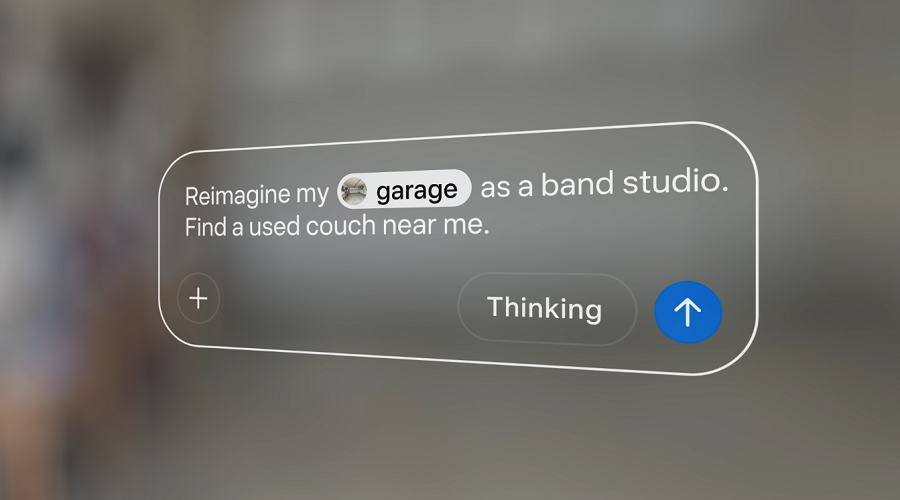
Meta Launches Multimodal Image Generation Model with Coding and Search Capabilities
Meta has released a new image generation model that integrates coding and search capabilities alongside visual generation, making it meaningfully more than a diffusion wrapper. This multimodal combination — generate, search, and write code in a unified model — signals Meta's push toward general-purpose multimodal agents rather than siloed image tools. For developers, this opens up workflows where image generation is part of a larger pipeline that also queries knowledge or outputs structured code. The model's positioning alongside coding capabilities suggests it may target developer productivity and AI-assisted design tooling. Availability details and API access should be checked against Meta AI's developer portal for integration planning.
Meta AI

xAI Releases Grok 4.5: Cursor-Trained Coding and Agentic Model at $2/M Input Tokens
SpaceX/xAI has released Grok 4.5, a model explicitly trained with Cursor for coding and agentic task performance, priced aggressively at $2 per million input tokens. The Cursor-training angle is notable — it suggests the model has been optimized for the edit-apply-test loop that characterizes real coding agent workflows rather than just code completion benchmarks. This positions Grok 4.5 as a direct competitor to Claude 3.5 Sonnet and GPT-4o for developer tooling and code agent use cases. The $2/M input price undercuts many comparable models, making it attractive for high-volume coding pipelines. Developers running code generation at scale or building IDE-integrated agents should benchmark this against their current model choice.
MarkTechPost
OpenAI Releases GPT-Live and GPT-Live-1 Mini: Full-Duplex Voice Models Backed by GPT-5.5 Reasoning
OpenAI has launched GPT-Live and GPT-Live-1 mini, two full-duplex voice models designed for real-time, natural spoken conversation. The key architectural decision is that deeper reasoning tasks are delegated to GPT-5.5 underneath, meaning the voice layer stays low-latency while complex queries still get a capable backbone. This is a significant departure from bolt-on TTS/STT pipelines — developers building voice assistants, customer support bots, or real-time interfaces now have a dedicated model optimized for that modality. The mini variant presumably offers cost and latency tradeoffs for lighter use cases. Developers working on conversational AI should evaluate whether this replaces their current STT + LLM + TTS stack and check the API availability for integration.
OpenAI Blog

'Humanizer' Tools Can Reliably Erase AI Text Detection Signals, Scientists Warn
A Nature-published study has found that commercially available 'humanizer' tools — software designed to rewrite AI-generated text to evade detection — are alarmingly effective at defeating current AI text detectors, including those used in academic and professional integrity systems. The research tested multiple detectors against humanized outputs and found that detection rates dropped dramatically, in some cases to near-chance levels, after humanization. This has direct implications for developers building content moderation, plagiarism detection, or trust-and-safety systems that rely on AI watermarking or stylometric detection as a meaningful signal. The findings suggest that detection-based approaches to AI content governance are fundamentally fragile and that developers should not treat any current detector as a reliable gate. It reinforces the argument for provenance-based approaches — such as cryptographic watermarking at generation time — rather than post-hoc detection.
Nature.com

Ant Group Open-Sources LingBot-Vision: 1B Boundary-Centric Spatial Perception Model
Ant Group's robotics division RobbyAnt has released LingBot-Vision, a 1-billion parameter vision foundation model specifically optimized for dense spatial perception with a focus on boundary detection and object edge understanding. Unlike general-purpose vision encoders, LingBot-Vision is designed for downstream robotics and manipulation tasks where precise spatial boundaries — not just object classification — determine whether an action succeeds or fails. At 1B parameters, it is sized for deployment on edge hardware and embedded robot controllers rather than cloud inference, which is a deliberate design choice for real-world robotics applications. The open-source release makes it directly usable by robotics developers who need a compact, boundary-aware vision backbone without training from scratch. This is one of the more practically targeted open vision releases for the robotics and embodied AI community in recent months.
MarkTechPost

Liquid AI Releases Antidoom: Open-Source Fix for Reasoning Model Doom Loops
Liquid AI has open-sourced Antidoom, a training method called Final Token Preference Optimization (FTPO) designed to eliminate 'doom loops' — a failure mode where reasoning models get stuck in repetitive, non-terminating chains of thought. FTPO works by applying preference optimization specifically on the final token of a reasoning trace, teaching models to recognize and exit unproductive loops rather than continuing them indefinitely. This is a practically significant problem for anyone deploying chain-of-thought or extended-thinking models in production, where doom loops waste compute and degrade user experience. The open-source release means developers can fine-tune their own reasoning models with this technique, or evaluate whether their current models exhibit this behavior. It represents a concrete, reproducible safety and reliability improvement rather than a vague alignment claim.
MarkTechPost
NVIDIA Open-Sources Audex: A 30B Audio-Text LLM Built on Nemotron
NVIDIA has released Audex (Nemotron-Labs-Audex-30B-A3B), a unified audio-text large language model that integrates audio understanding directly into a text-capable backbone without degrading its language reasoning performance. The model is a 30B parameter mixture-of-experts architecture with only 3B active parameters per forward pass, making inference more practical than the parameter count suggests. A key design goal was preserving the text intelligence of the underlying Nemotron model while adding audio modality — a common failure mode in multimodal fine-tuning that NVIDIA explicitly claims to have addressed. For developers building voice assistants, transcription pipelines, or audio-grounded reasoning applications, Audex offers a production-weight open model worth benchmarking. Its release on Hugging Face makes it immediately accessible for experimentation.
NVIDIA

MiniCPM5 Delivers On-Device Reasoning at 1B Parameters
MiniCPM5 is a 1-billion-parameter model that prioritizes reasoning capability over expanded memory, making it one of the more capable sub-2B models for on-device deployment. The design philosophy trades off extended context for stronger step-by-step reasoning, which is a meaningful tradeoff for edge inference scenarios where memory bandwidth is constrained. Developers building mobile, embedded, or offline-capable AI features now have a stronger open option in the 1B class. The model is positioned as a practical alternative to distilled reasoning models that often require more memory than edge hardware can provide. This is worth testing for any developer building on-device agents, local copilots, or privacy-sensitive applications.
Geeky Gadgets
NVIDIA: Open Models Are Driving AI Research, Highlighted at ICML 2026
NVIDIA has published a blog post timed to ICML 2026 making the case that open models are now central drivers of cutting-edge AI research, not just convenient baselines. The piece highlights how open-weight models enable reproducibility, community-driven improvements, and rapid iteration that closed APIs cannot match. For developers, this signals that NVIDIA is institutionally invested in the open model ecosystem, which has implications for tooling, hardware optimization, and future model releases. The ICML context means this framing is being presented directly to the research community, likely influencing grant directions and academic-industry collaboration. Developers building research infrastructure or fine-tuning pipelines should note that the open model ecosystem is gaining serious institutional momentum.
NVIDIA
OpenAI Ships GPT-Realtime-2.1 and GPT-Realtime-2.1-mini for Low-Latency Voice Agents
OpenAI has released two new models via its Realtime API: GPT-Realtime-2.1 and a smaller GPT-Realtime-2.1-mini, both targeting low-latency voice agent applications. These models are accessible now through the API, meaning developers building voice interfaces, phone bots, or multimodal agents can swap them in immediately. The mini variant is positioned for cost- and latency-sensitive deployments where full model quality is less critical than response speed. This continues OpenAI's push to make real-time speech a first-class API primitive rather than a bolted-on feature. Developers working on voice-first agents should test these against existing Whisper plus TTS pipelines to evaluate end-to-end latency and quality tradeoffs.
OpenAI Blog

Tencent Releases Hy3: Open 295B MoE Model with 21B Active Parameters and 256K Context
Tencent has open-released Hy3, a 295-billion-parameter Mixture-of-Experts model that activates only 21B parameters per forward pass, making inference significantly more tractable than its total size implies. The model supports a 256K token context window, which puts it in direct competition with frontier-tier long-context models. Being fully open, developers can self-host, fine-tune, and deploy Hy3 without API gating or usage restrictions. The MoE architecture means it can run on reasonable multi-GPU setups rather than requiring warehouse-scale compute for inference. This is a meaningful addition to the open-weight ecosystem and worth benchmarking against Mixtral and DeepSeek MoE variants for long-document and agentic tasks.
MarkTechPost
Gwern Publishes Deep Dive on Lean Software Scaling Laws
Gwern has published a substantial research essay exploring scaling laws specifically applied to Lean, the interactive theorem prover and formal verification language increasingly used in AI-assisted mathematics. The piece examines how compute, data, and model size interact in the formal proof domain, which behaves differently from natural language because correctness is verifiable and the search space is combinatorial. This is highly relevant for developers and researchers working on AI for formal verification, automated theorem proving, or any application where outputs need hard guarantees rather than statistical accuracy. Scaling laws research in this domain is still early, and a rigorous Gwern-style analysis can meaningfully shape which bets are worth making. Developers building coding assistants or proof assistants on top of LLMs should read this to calibrate expectations about what scale alone can and cannot solve.
Gwern.net
Training Gemma-3 for Structured Math Reasoning with GRPO, LoRA, and GSM8K Rewards
A detailed technical walkthrough covers fine-tuning Google's Gemma-3 for structured mathematical reasoning using Tunix GRPO (Group Relative Policy Optimization), LoRA adapters, and GSM8K-based reward signals. GRPO is a reinforcement learning from human feedback variant that has gained traction as a more sample-efficient alternative to PPO for reasoning tasks, and pairing it with LoRA makes the compute requirements accessible to teams without massive GPU clusters. GSM8K as a reward signal is a well-understood benchmark, making results reproducible and comparable to published baselines. This is a practical recipe developers can adapt for other structured reasoning domains — code generation, logical deduction, or tool-use — not just math. The combination of an accessible open model (Gemma-3), parameter-efficient fine-tuning (LoRA), and a principled RL objective (GRPO) represents a compelling open-source stack for reasoning specialists.
MarkTechPost

Synthetic Sciences Releases OpenScience: Open-Source, Model-Agnostic AI Workbench for Scientific Research
Synthetic Sciences has open-sourced OpenScience, a model-agnostic AI workbench targeting machine learning, biology, physics, and chemistry research workflows. Being model-agnostic is a key design choice — it means developers and researchers can plug in whatever frontier or open model is best suited to a given scientific task rather than being locked to a single provider. The workbench appears to provide structured environments for running AI-assisted experiments, managing hypotheses, and integrating domain-specific tools across scientific disciplines. For AI engineers building research assistants or agentic science tools, this is a potentially valuable scaffolding layer rather than starting from scratch. The open-source release also makes it a candidate for community extension into additional scientific domains.
MarkTechPost
Meituan Releases LongCat-2.0: 1.6T-Parameter Open MoE with Native 1M-Token Context
Meituan has open-released LongCat-2.0, a 1.6-trillion-parameter Mixture-of-Experts model featuring native 1 million token context support via a custom LongCat Sparse Attention mechanism. This is a significant open-weight release because truly native long-context (not interpolated or fine-tuned post-hoc) at this scale is rare in open models. Developers building RAG pipelines, document analysis tools, or long-horizon agents can now experiment with a model that doesn't require chunking strategies to handle book-length inputs. The sparse attention design is architecturally notable — it's designed to make 1M-token inference tractable rather than just technically possible. This is one of the most capable open long-context models available and warrants immediate evaluation for any use case bottlenecked by context length.
MarkTechPost
Apple integrates on device LLM into iOS 20
Apple announced a fully on device large language model coming to iOS 20 with no data sent to servers.
Apple
Anthropic releases Claude 4 with improved coding abilities
Anthropic announced Claude 4 featuring significantly improved coding, reasoning and instruction following.
Anthropic
Meta releases Llama 4 with 400B parameters
Meta open sourced Llama 4, its largest model yet at 400 billion parameters, available for commercial use.
Meta AI
Mistral releases new open source model beating GPT-4
French AI startup Mistral released a new open source model that benchmarks ahead of GPT-4 on several tasks.
Mistral AI
Google DeepMind releases Gemini 2.0 with multimodal capabilities
Google DeepMind has unveiled Gemini 2.0, featuring enhanced multimodal understanding across text, images, and audio.
Google DeepMind
OpenAI releases GPT-5 with major reasoning improvements
OpenAI has announced GPT-5, claiming significant improvements in reasoning, coding, and multimodal understanding compared to its predecessor.
OpenAI Blog