Also today
GPT-5.6 Becomes the Default Model in Microsoft 365 Copilot
OpenAI has confirmed that GPT-5.6 is now the preferred and default model powering Microsoft 365 Copilot, replacing its predecessor across Word, Excel, Teams, and other M365 surfaces. This signals the speed at which OpenAI is deploying frontier model iterations into enterprise products at massive scale, compressing the gap between research release and production deployment. For developers building on the Microsoft 365 ecosystem or Copilot extensibility APIs, this means the underlying reasoning and tool-use capabilities available to their plugins and agents have materially improved. It also sets a precedent for how the Sol/Terra/Luna tiers may be routed in enterprise contexts — with Luna or Terra likely serving high-volume Copilot tasks and Sol reserved for complex workflows. Developers integrating with M365 Copilot should audit their prompts and tool schemas against the new model's behavior.
OpenAI Blog
OpenAI Launches GPT-5.5 Bio Bug Bounty to Stress-Test Biosecurity Guardrails
OpenAI has opened a structured bug bounty program specifically targeting GPT-5.5's biosecurity safeguards, inviting qualified researchers to probe the model's resistance to biological threat-related queries. This is a notable step toward adversarial red-teaming becoming a formalized, public-facing practice rather than an internal-only process, and it sets a template other labs may follow. For developers building applications in life sciences, healthcare, or dual-use domains, this signals that OpenAI is applying heightened scrutiny to bio-related outputs — which will affect what the model will and won't do in those contexts. The bounty also implies that biosecurity is now treated as a first-class safety category on par with CSAM or weapons uplift, shaping future policy and API usage terms. Developers should monitor findings from this program, as discovered jailbreaks typically lead to capability restrictions that can affect adjacent legitimate use cases.
OpenAI Blog
Meta Superintelligence Labs Releases Muse Spark 1.1: Multimodal Reasoning Model for Agentic Tasks on Meta Model API
Meta Superintelligence Labs has released Muse Spark 1.1, a multimodal reasoning model designed explicitly for agentic task execution and available through the Meta Model API. The model targets complex multi-step workflows that require understanding across text and visual inputs, positioning it as a direct competitor to GPT-5.6 and Gemini in the agentic multimodal space. The release on Meta's own Model API is significant — it gives developers a direct programmatic path to a frontier Meta model outside of third-party API wrappers or open weights, which has not always been Meta's default strategy. For teams building agents that need to process documents, images, and structured data in a single pipeline, Muse Spark 1.1 is worth immediate benchmarking. The agentic framing suggests Meta has invested in reliable tool use and multi-turn coherence, which are the most common pain points in production agent deployments.
Meta AI
NVIDIA Nemotron Labs 3 Puzzle 75B A9B: Compressed Hybrid MoE LLM Delivering 2.03x Server Throughput
NVIDIA's Nemotron Labs has released Puzzle 75B A9B, a compressed hybrid Mixture-of-Experts language model with 75 billion total parameters but only 9 billion active per token, achieving a reported 2.03x improvement in server throughput over its uncompressed counterpart. The hybrid MoE architecture is the key technical innovation here — combining dense and sparse routing to maximize GPU utilization while preserving model quality at scale. For infrastructure engineers and teams running self-hosted inference, a 2x throughput gain at this parameter scale is significant and could substantially reduce per-token compute costs on NVIDIA hardware. The model is likely optimized for NVIDIA's own GPU stack (H100/H200/B200), so teams not on NVIDIA infrastructure should verify compatibility before planning deployments. This release reinforces NVIDIA's strategy of moving up the stack from silicon into model architecture, making its hardware more competitive by co-designing models that exploit its memory bandwidth and interconnect strengths.
NVIDIA

Anthropic Discovers a Hidden Conceptual Reasoning Space Inside Claude
Anthropic researchers have identified what they describe as a latent conceptual space within Claude where the model appears to internally deliberate over abstract concepts before producing outputs — a mechanistic interpretability finding with significant implications for how developers and safety researchers understand model behavior. This is not a product release but a research discovery that advances the field's ability to look inside transformer-based models and identify structured intermediate representations that correspond to human-legible reasoning steps. For developers, this suggests that Claude's outputs are more interpretable at the activation level than previously understood, which could eventually enable new debugging, auditing, and steering techniques for production deployments. From a safety perspective, identifying where and how models reason about concepts internally is a prerequisite for reliable intervention — making this directly relevant to alignment and red-teaming work. Teams working on interpretability tooling or building high-stakes applications on top of Claude should read the full research, as it may inform how to probe for model uncertainty or conceptual drift in outputs.
Anthropic

Datalab LIFT: How a 9B Schema-First Document Extractor Stacks Up Against NuExtract3, LlamaExtract, Marker, and Docling
Datalab has released a detailed benchmark comparing its LIFT model — a 9B parameter schema-first document extraction model — against leading extractors including NuExtract3, LlamaExtract, Marker, and Docling across structured data extraction tasks. Schema-first extraction means the model is conditioned on a target output schema before processing a document, which typically yields higher precision on structured fields compared to general-purpose LLM extraction pipelines. For developers building document processing pipelines — particularly in finance, legal, or enterprise data ingestion — this benchmark provides a direct apples-to-apples comparison at the task level rather than generic NLP benchmarks. A 9B model that outperforms larger or more complex pipelines on extraction tasks would have strong practical value for teams needing to run inference on-premise or at reduced cost. Developers evaluating document extraction tooling should use this comparison as a starting checklist before committing to a pipeline architecture.
MarkTechPost
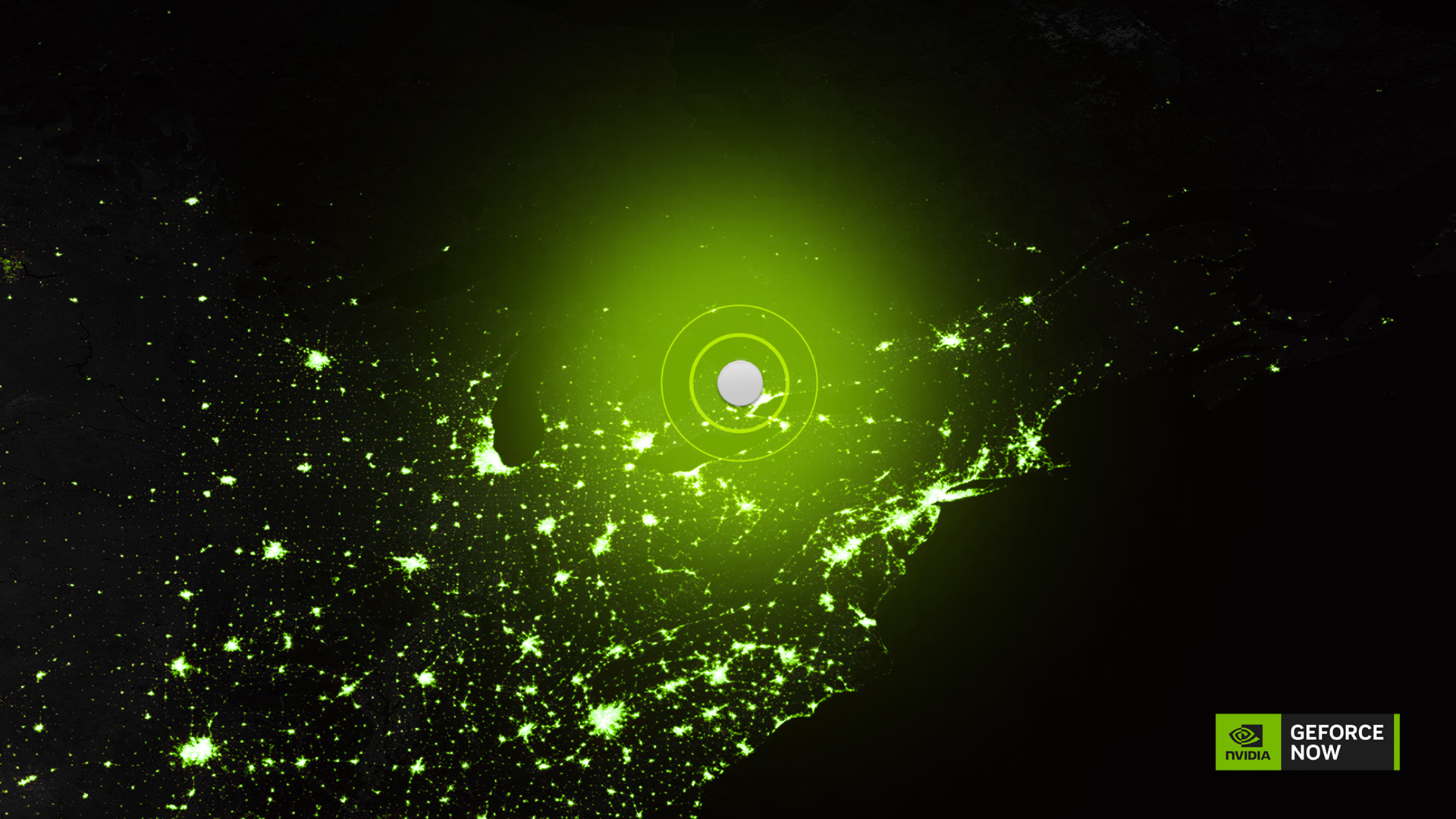
GeForce NOW Expands with RTX 5080-Powered Toronto Servers for Cloud AI Workloads
NVIDIA has expanded its GeForce NOW cloud infrastructure with a new Toronto server cluster powered by GeForce RTX 5080 GPUs, increasing capacity and reducing latency for North American users. While primarily framed as a gaming cloud expansion, RTX 5080 hardware running in cloud servers is directly relevant to developers who use GeForce NOW's API access or NVIDIA's cloud rendering and inference services for GPU-accelerated workloads. The RTX 5080's Blackwell architecture brings improved tensor core throughput and memory bandwidth that benefit both real-time rendering and lightweight inference tasks at the edge. For developers building applications that leverage NVIDIA's cloud GPU fleet — including those using GeForce NOW as an accessible GPU-as-a-service layer — the Toronto expansion improves regional availability and potentially lowers round-trip latency for Canadian and northeastern US users. This also signals continued NVIDIA investment in distributed GPU cloud infrastructure as a complement to its datacenter H/B-series offerings.
NVIDIA